

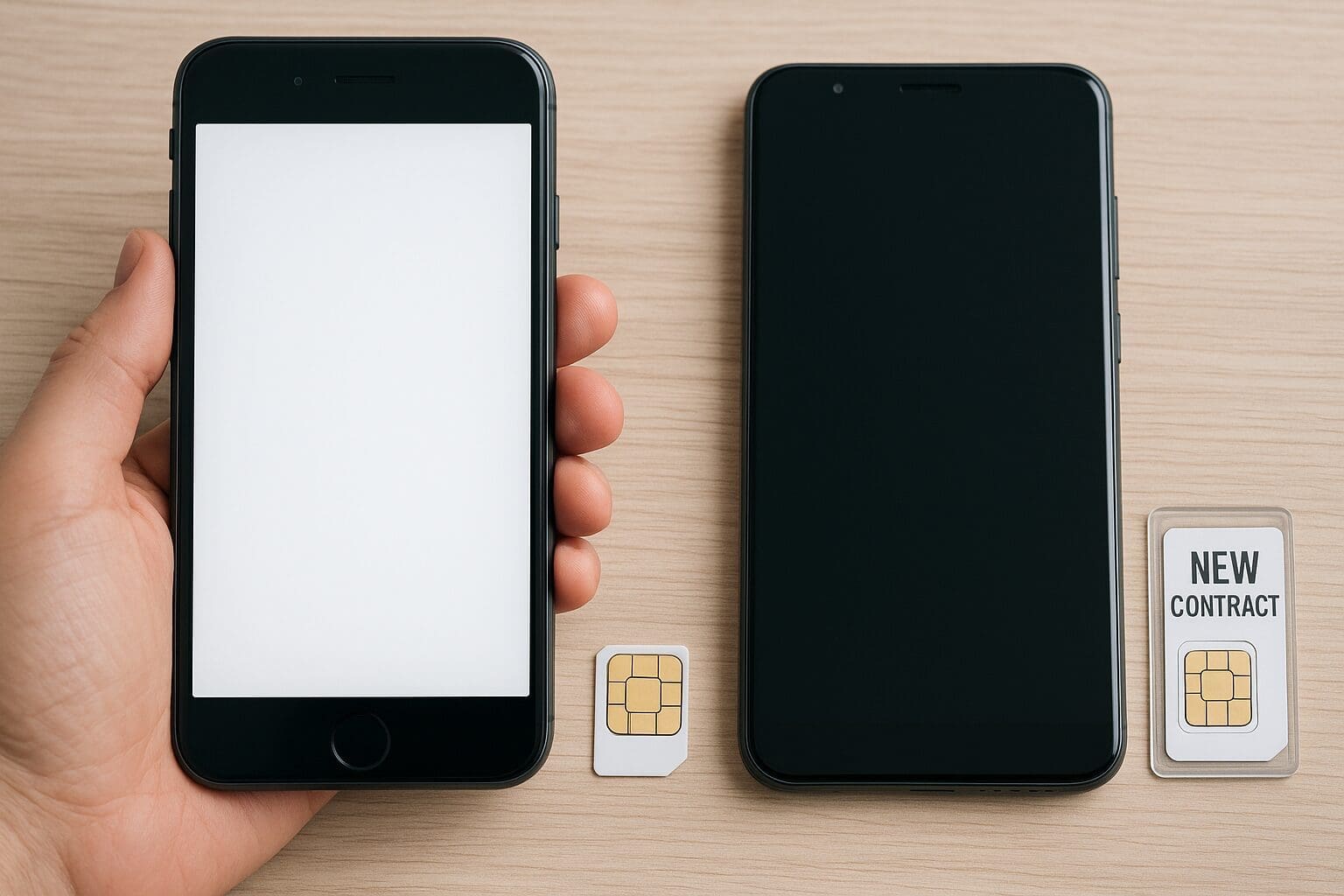

Sim-only vs phone contracts is one of the most important comparisons people make when choosing a new mobile plan in the UK. Understanding how these two types of deals differ, in cost, flexibility, commitment, and upgrade options, helps you choose a plan that genuinely suits your lifestyle and budget.
Many UK consumers compare sim-only vs phone contracts because the long-term cost difference can be significant.
What Is a SIM-Only Plan?
A SIM-only deal gives you just a SIM card with minutes, texts, and data, but no phone included. You bring your own device (or buy one outright separately).
It’s popular because it usually costs less each month, avoids long commitments, and gives you more control over your mobile usage. You’re free to switch phones whenever you want, and you can change network or tariff more easily than with a traditional contract.
SIM-only plans are ideal for people who are happy with their current phone, prefer flexibility, or want lower monthly costs without hidden handset fees wrapped into the bill.
When weighing up sim-only vs phone contracts, SIM-only usually offers more flexibility and lower monthly bills.
What Is a Phone Contract?
A phone contract bundles both the handset and the mobile plan into one fixed monthly payment. You spread the cost of the phone over 24 or sometimes 36 months, making it easier to get a new or premium device without paying upfront.
These contracts come with predictable monthly payments and often include perks such as handset upgrades, insurance options, or extra data packages. The flip side is being tied into a long-term commitment. If your circumstances change, it’s harder to switch early without fees.
Contracts are ideal if you want the latest iPhone or Samsung model but don’t want to pay full price upfront, or if you prefer the simplicity of one bill covering everything.
The Key Difference Between SIM-Only and Phone Contract Plans
The biggest difference between SIM-only and phone contract deals lies in flexibility and cost.
With SIM-only, you’re only paying for your mobile allowance, which gives you more freedom and often lower bills. You can change providers easily and upgrade your phone whenever you like.
A phone contract includes the cost of the handset. It’s convenient and spreads payments out, but you’re tied into the deal until the device is fully paid off. This makes it less flexible, but ideal if you want the latest phone without the upfront spend.
Which One Is Better for You?
There’s no universal “best” choice , it depends entirely on your habits, your budget, and how often you like to upgrade your phone.
If you want low monthly costs, freedom to change anytime, or you already own a good phone, SIM-only usually makes more sense. It’s often the cheapest way to stay connected.
If you want a new phone, don’t want to spend hundreds upfront, or like having the newest model every couple of years, a phone contract is more convenient.
Some people even mix both styles: buying a refurbished or mid-range handset outright, then pairing it with a SIM-only deal. This can work out cheaper than a full contract and gives you flexibility without sacrificing quality.
The real debate in sim-only vs phone contracts comes down to whether you prefer freedom or convenience.
Compare Mobile Plans
Factors That Influence Your Decision
Before choosing, it helps to think about how you actually use your phone day to day.
Do you stream a lot, or mostly use Wi-Fi? Are you someone who likes the newest model, or do you keep your phone until it dies? Are you looking to cut down monthly costs, or do you value convenience?
SIM-only plans tend to appeal to people who enjoy control and transparency. Contracts appeal to those who want affordability and predictability for a new handset.
Your credit rating can also play a part. Phone contracts often involve credit checks because you’re essentially financing a device. SIM-only deals are usually easier to get approved for.
Your choice in sim-only vs phone contracts often depends on how often you upgrade your phone and how much you want to spend each month
Total Cost: SIM-Only vs Phone Contracts
When you add up the true cost, handset + plan, SIM-only paired with an outright phone purchase usually works out cheaper. But paying upfront isn’t practical for everyone, so spreading payments across a contract can still be worth it depending on your budget.
Once you calculate the total cost over two years, the sim-only vs phone contracts difference becomes clearer.
Is It Cheaper to Buy a Phone Outright?
Often, yes , especially when you pair the handset with a SIM-only plan. You avoid interest or handset mark-ups that can be hidden inside contract prices.
But affordability depends on whether you’re able to pay upfront. For many people, spreading the cost over 24 months is more manageable and worth the premium.
This is why comparing total cost of ownership (phone + plan) matters more than just looking at a cheap monthly bill.
Frequently Asked Questions
Is SIM-only always cheaper than a phone contract?
Usually, yes , especially if you already have a good handset. SIM-only plans often cost much less per month because you’re not paying off a phone.
Can I keep my number if I switch to SIM-only?
Yes. You simply request a PAC code from your current provider and give it to your new one. Switching is easy and usually takes less than a day.
Do SIM-only plans have credit checks?
Some networks do, some don’t. They are generally easier to pass than handset contracts because you’re not financing a device.
For many people, the sim-only vs phone contracts decision comes down to credit checks, since SIM-only plans are usually easier to pass.
How long are SIM-only plans?
They range from rolling 1-month plans to 12-month or even 24-month deals. Shorter plans offer flexibility; longer ones reduce the cost.
Can I switch from a contract to SIM-only?
Yes, once your contract ends. Many customers move to SIM-only once they’re happy with their phone and want to reduce monthly spending.
If your priority is lowering monthly spending, the sim-only vs phone contracts comparison will almost always favour SIM-only.
What if I want a new phone later?
You can buy a device outright at any time, use a refurbishment marketplace, or upgrade through your network when your current plan ends.
Do contracts include upgrades?
Some networks offer early upgrade schemes, but they usually come with fees or require you to trade in your device.
Which option is best for heavy data users?
Both options work , it depends on the plan. SIM-only unlimited data deals are increasingly common and often cheaper than contract equivalents.
Can I get a SIM-only deal if my phone is locked?
If your phone is locked, you can ask your current network to unlock it for free. All UK networks are required to unlock phones upon request.
What should I do if my current contract is ending?
It’s a great time to compare options. Prices shift constantly, and you may save significantly by switching to SIM-only or choosing a new contract.
Final Thoughts
The choice between SIM-only and a phone contract comes down to what you value most: flexibility or convenience, lower monthly costs or a brand-new handset. Understanding the differences helps you avoid overpaying and pick a plan that fits your lifestyle perfectly.
In the end, the sim-only vs phone contracts question has no universal answer, it depends entirely on your habits and priorities.


