


What Is Home Battery Storage and How Does It Work?
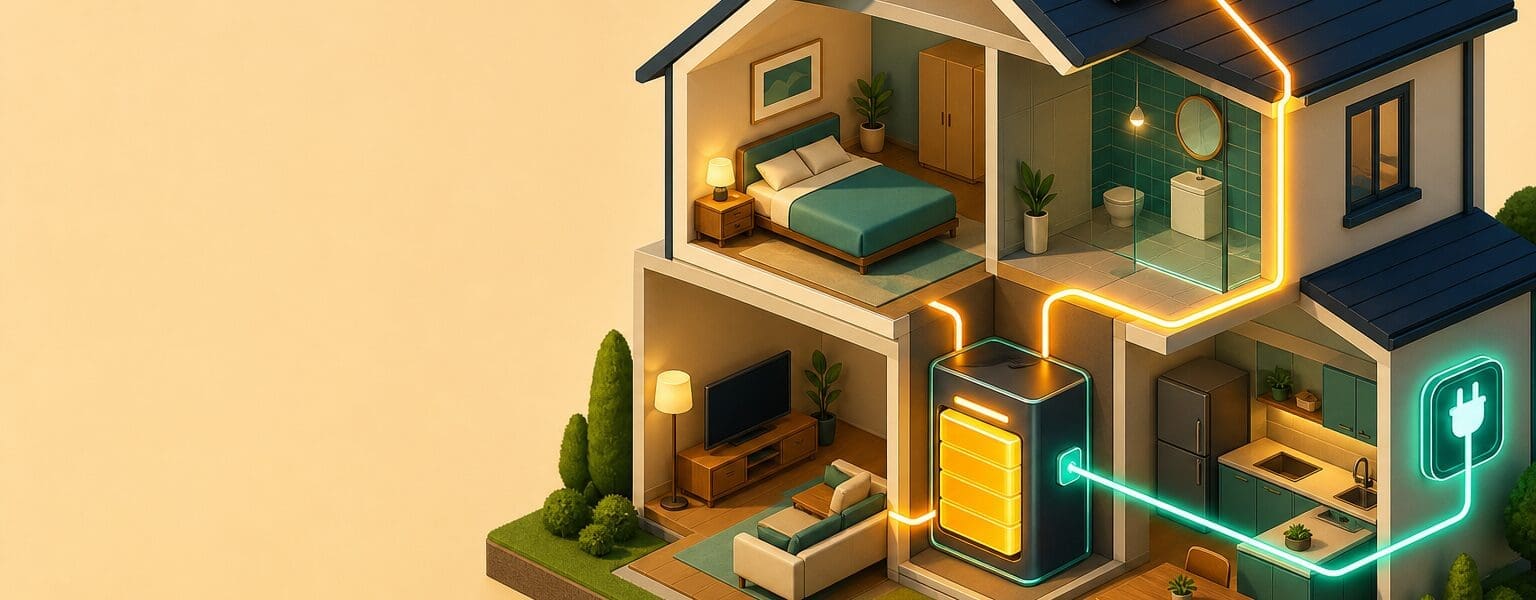
Home battery storage is a box, usually about the size of a suitcase, that stores electricity so you can use it later instead of the moment it is generated or bought. Most systems sit in a garage or utility room and charge either from solar panels during the day or from the grid overnight when rates are cheaper.
The idea is simple. Store power when it is cheap or free, then use it when it would otherwise cost more. For solar households, that means using your own sunshine after dark instead of exporting it for a few pence and buying it back later at a much higher rate.
For everyone else, a battery paired with a time of use tariff can shift your usage into the cheapest overnight hours automatically. No getting up at 2am to run the washing machine required.
How Much Does Home Battery Storage Cost in 2026?
Prices have fallen a long way. A typical 5kWh battery now costs roughly £2,500 to £4,000 installed, while a larger 10kWh system that could realistically cover a family home overnight tends to run around £5,000 to £7,500, depending on the brand and your installer.
Battery storage has been zero rated for VAT since February 2024, so that price already has the 20% stripped out. On a mid sized system that is a saving of around £1,000 or more compared with the old rate, and it applies whether or not you are adding solar at the same time.
Key takeaways
- Home battery storage tends to pay back fastest when it is installed alongside solar panels, roughly 6 to 9 years on a typical home.
- Without solar, payback stretches out, often 12 to 15 years, so the sums need to add up on their own.
- Installed battery storage costs have roughly halved since 2020 and are zero rated for VAT.
- A time of use tariff is usually needed to get the most from a battery bought without solar.
Is Home Battery Storage Worth It Without Solar Panels?
Yes, but the case is weaker and depends heavily on your tariff. Without solar, a battery only saves you money by charging on a cheap overnight rate and discharging during expensive peak hours, so you need a time of use tariff that has a wide enough gap between the two to make it worthwhile.
Run the numbers before you commit. If your supplier’s cheap rate and expensive rate are only a few pence apart, a battery bought without solar could take well over a decade to pay for itself, and that is before accounting for maintenance or eventual replacement.
Households with solar already installed, or planning to add it, tend to see a much stronger case, since the battery is soaking up power that would otherwise be exported for a fraction of its retail value.
How Does Battery Storage Pay for Itself?
The maths comes down to three things: how much you paid for the system, how much you save per unit of electricity you shift, and how many days a year the battery gets a full cycle of use. Solar households in the South of England, with more sunshine hours, will generally cycle a battery more often than a home in the North relying mainly on a time of use tariff.
As a rough guide, the cost per kWh of storage capacity has fallen from around £800/kWh in 2020 to somewhere between £400 and £550/kWh in 2026. That is the main reason payback periods have shortened, even though household electricity prices have also moved around a lot over the same years.
None of these figures are a promise. Every roof, tariff and usage pattern is different, so get a proper quote before signing anything. And be wary of any installer who guarantees a fixed payback period regardless of your circumstances. That number does not exist.
Home Battery Storage and the Smart Export Guarantee
If you have solar panels, you are entitled to be paid for electricity you export to the grid under the Smart Export Guarantee, regulated by Ofgem. Export rates vary a lot by supplier, and are typically a small fraction of what you pay to import electricity.
That gap is exactly why a battery can make sense. Instead of exporting cheap and importing dear, you use more of your own generation on site. It will not eliminate your bill, and it will not suit every roof or every budget, but for the right household it is one of the more solid ways to get real use out of solar panels that would otherwise sit idle for half the day.
If you are still deciding whether solar is right for you in the first place, it is worth reading up on switching supplier once you have solar panels installed, since not every tariff plays nicely with export payments.
Getting the Basics Right Before You Buy
Before you get quotes for home battery storage, check three things. First, confirm your current tariff, since a flat rate tariff makes a battery bought without solar far less useful than a time of use one.
Second, check your usage pattern. If you are out at work all day and home in the evening, you will get less from solar alone and more benefit from storage that catches the cheap overnight rate instead.
Third, get at least two or three quotes. Installed costs for what is technically the same size of battery can vary by a thousand pounds or more between installers, so shopping around matters just as much here as it does with your energy tariff. If you have not checked your wider bill lately, our guide on cutting your home energy bills in 2026 is a good place to start, and if you are charging an EV at home too, pairing that with the right tariff is covered in our EV energy tariff guide.
Doing nothing costs you nothing extra today. But battery storage tends to get a little cheaper and a little more efficient every quarter, so there is no harm getting quotes now even if you end up waiting a year to actually buy.
Frequently Asked Questions About Home Battery Storage
- How long does a home battery storage system last?
- Most home battery storage systems are warrantied for around 10 years and can often keep working well beyond that, though capacity gradually reduces with age, similar to a phone battery.
- Can I add battery storage to existing solar panels?
- Yes, most battery systems can be retrofitted to existing solar panels, though compatibility with your specific inverter is worth checking with an installer first.
- Does home battery storage work during a power cut?
- Only if the system is specifically installed with backup capability, since many standard setups switch off automatically for safety during a grid outage.
- Is home battery storage covered by any government grants?
- There is no direct grant for battery storage alone, but it is zero rated for VAT, and it can qualify for VAT relief alongside solar panels or a heat pump installed as part of the same job.
- What size home battery storage do I need?
- It depends on your typical daily usage and, if you have solar, how much you generate. A qualified installer should size the system around your actual consumption rather than selling you the biggest option available.


