

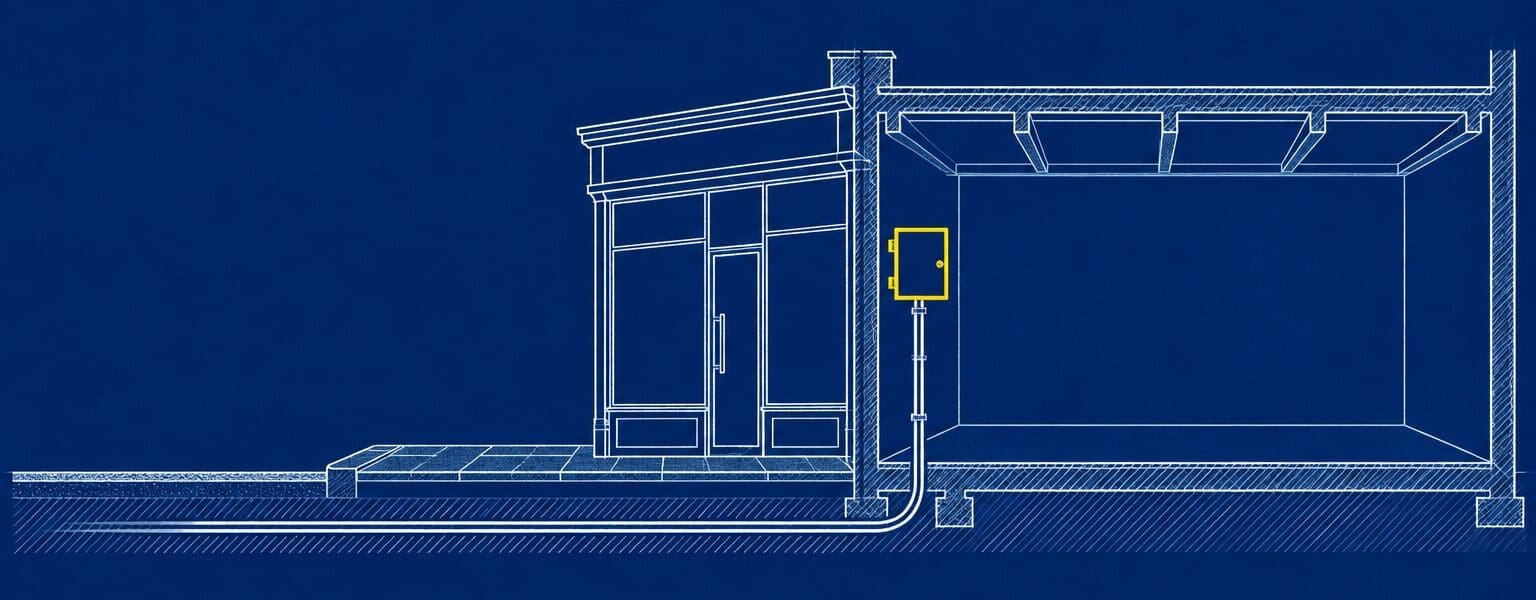

A new business meter is two jobs, done by two different companies
Getting a new business meter sounds like one phone call. It’s usually two separate jobs, done by two different companies, and the order you do them in decides whether you open on time.
The first job is the connection: the cable or pipe that brings power or gas to the building. The second is the meter itself, which a supplier fits once you’ve agreed a contract with them. Mix up who does what and you can lose weeks waiting for the wrong firm to call back.
This guide sets out the order for a new business meter, using the process two large suppliers publish for business customers. The roles come from Ofgem. The detail comes from E.ON Next and British Gas, named because their pages set out the process in full on 13 November 2026, not because we rate them above anyone else. Other suppliers run their own versions.
Who installs a new business meter?
Your energy supplier arranges the meter. The network company that owns the cables in your area builds the connection up to the building, and it doesn’t fit the meter or sell you energy.
E.ON Next’s guide puts the split simply. Your local Distribution Network Operator, or DNO, handles the work outside by installing the physical cables to the property. The supplier then installs the meter and activates the supply contract.
Ofgem is the one that explains your choice, or lack of it. It says most DNOs are regional monopolies, so you don’t get to choose yours, it’s based on your location. Its guidance is the same on the order of play: contact your local network operator for the connection, and choose a supplier to get the meter installed and to bill you.
So if the unit has never had a supply, or the old one was removed, you start with the network. If the cables are already there and only the meter is missing, you can go straight to a supplier.
What are the steps to get a new business meter?
The steps run in a fixed order: connection, supply number, contract, meter, first bill. Here’s how the two suppliers we read describe it.
| Step | What happens | Who does it |
|---|---|---|
| 1. Connection | The site is assessed and the cables or pipes are brought to the building | The network operator |
| 2. Supply number | The site is given an MPAN for electricity or an MPRN for gas | The network operator, once the connection work is done |
| 3. Contract | You get a quote and agree a supply contract | You and your chosen supplier |
| 4. Meter | The supplier books a visit and fits the meter | The supplier |
| 5. First bill | The account is set up and billing starts | The supplier |
Step 3 is the one that catches people out. British Gas lists “agree an energy supply contract” as step 2 and “your site visit” as step 3 in its own process for a new commercial connection or meter. E.ON Next registers your supply number and sets up the tariff before it fits anything. In both cases, the contract comes before the new business meter.
How long does a new business meter take?
For the meter itself, E.ON Next says it aims to install within 15 working days of setting up your registered account, provided the site is ready and safe. That’s one supplier’s stated aim, not an industry rule, and it doesn’t include the connection work.
The connection is the part that varies. A unit on an existing street with cables nearby is a different job from a new build at the end of a lane. Neither supplier page gives a timescale for the network’s part, so ask the network operator for one in writing before you fix an opening date.
The practical lesson for a new business meter: start early, and run the two jobs side by side where you can. Ofgem advises arranging your supplier at the same time as sorting the connection with the DNO, to avoid delays. Get quotes while the connection work is being planned, so the contract is ready the day the supply number arrives.
Which type of meter will you get?
It depends on how much power the site draws and when. E.ON Next’s guide describes the main types of new business meter like this.
Business meter types, as E.ON Next describes them
- Standard business meters, profile classes 03 and 04, for shops, salons and small offices with ordinary daytime use.
- Half hourly meters, which it says are mandatory where a site’s peak demand is 100kVA or more. They record use every 30 minutes.
- Multi rate meters, for businesses that use a lot of power outside normal hours, such as bars, bakeries and hotels. They allow cheaper off peak rates, such as Economy 7 or Economy 10.
- Gas meters sized by peak hourly demand: U6 for up to 6 cubic metres an hour, U16 for up to 16, and U25 for up to 25.
Size matters more for gas than most people expect. A small office heating system and a restaurant kitchen need very different meters. Tell the supplier what equipment you’ll be running, not just the floor area.
If the site will use a lot of power, read our guide to half hourly metering for businesses. For everyone else, smart meters for businesses explains what a modern meter records and why.
The cost of using energy before you have a contract
A new business meter with no agreed contract behind it is an expensive thing to switch on. Energy used without a contract is charged at deemed rates, which are the supplier’s default prices.
E.ON Next’s guide says deemed rates can be up to 70% more expensive than a negotiated fixed term contract. That’s its own figure about its own market view, so treat it as a warning about scale, not a precise number for every supplier.
The fix is in the order of the steps. Agree the contract before the meter goes live, and you start on the price you chose. Our guide to energy when you move business premises covers the same trap for sites that already have a supply, and microbusiness energy rights covers the protections smaller firms get.
You’re also free to compare before a new business meter goes in. Get more than one quote before you pick a supplier.
Frequently asked questions about a new business meter
- Do I need a supply contract before a new business meter is fitted?
- On the two supplier processes we read, yes. British Gas lists agreeing a supply contract before the site visit, and E.ON Next sets up the tariff before it installs the meter.
- What are MPAN and MPRN numbers?
- They’re the unique numbers for a supply point. An MPAN is for electricity and an MPRN is for gas. E.ON Next says the network operator issues them once the connection work is finished, and the supplier needs them to register your supply.
- Can I choose who builds the connection?
- You can’t choose your Distribution Network Operator, because Ofgem says most are regional monopolies set by your location. Ofgem does say you don’t have to use your DNO for every connection service, so ask about independent providers. You can always choose your energy supplier.
- When is a half hourly meter required?
- E.ON Next says half hourly meters are mandatory where a site’s peak demand is 100kVA or more.
Sources
- Ofgem, “Get or alter a gas or electricity connection”. Who to contact for a new connection and a meter, DNOs as regional monopolies you can’t choose, independent connection providers, and arranging a supplier at the same time to avoid delays. The page shows no date. Read 13 November 2026.
- E.ON Next, “Getting a New Business Energy Meter Connection”. The roles of the network operator and supplier, MPAN and MPRN issue, the step order, the 15 working day aim, meter types and the deemed rates figure. The page shows no date. Read 13 November 2026.
- British Gas business, “Commercial gas and electricity meter installations”. Its listed steps for a new commercial connection or meter, with the supply contract at step 2 and the site visit at step 3. The page shows no date. Read 13 November 2026.
Checked 13 November 2026.


