


2G devices on Vodafone now have a spring 2030 deadline
Any 2G devices your business runs on the Vodafone network will stop connecting in spring 2030. VodafoneThree has put that date on its own page about the switch off, and it comes with a note that some areas may lose 2G earlier as the company tests the change.
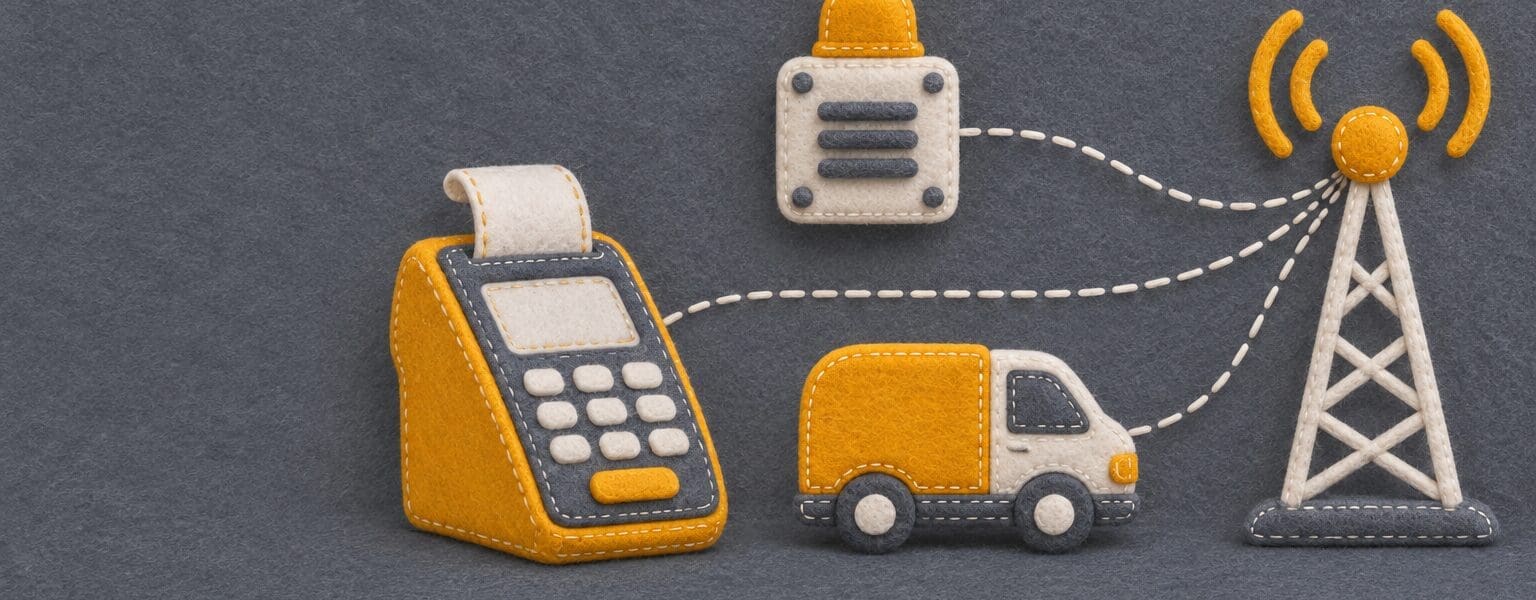
For staff smartphones this is a non event, since they use 4G or 5G. The risk sits in the kit nobody thinks of as a phone: the card machine by the till, the alarm panel in the stock room, the box that dials out when the fire alarm trips.
Those often have a SIM inside, and the older ones are frequently 2G devices. A little over three years sounds like a long time. Replacing equipment across several sites, through a supplier with a queue, can eat most of it.
Key takeaways
- VodafoneThree says the Vodafone 2G network will be switched off in spring 2030, in phases.
- Ofcom says all 2G only devices will need upgrading to at least 4G.
- The government’s 2G charter says users are expected to identify what’s affected and act. The networks often have no direct relationship with the end user.
- The first call about any 2G devices is to whoever supplied the equipment or the SIM inside it.
Which 2G devices does a business usually have?
The 2G devices most likely to be on a business premises are payment terminals and alarms. Ofcom’s advice names telecare alarms, security alarms, fire alarms, ATMs and payment terminals as equipment that can rely on mobile networks, and lists smart meters, eCall, EV charging points and parking meters as further examples. VodafoneThree adds door entry systems, and says it will support business customers who use 2G for smart meters.
Ofcom’s wording is direct: “All 2G-only devices will need to be upgraded to at least 4G.” Newer versions of the same equipment generally use 4G already, so the problem is older 2G devices that are still installed. That’s the alarm fitted when you took the lease, or the spare card reader in the drawer.
Devices with a SIM that could only use 3G have already stopped working, because every UK network has switched 3G off. If something went quiet over the last couple of years and nobody worked out why, that may be the answer.
Who is responsible for replacing 2G devices?
In practice, you and your supplier are, not the mobile network. The government’s voluntary 2G charter, signed by VodafoneThree, EE and Virgin Media O2, says it “does not cover the responsibilities of affected users to identify and manage their own services”.
The reason is in the same document. In many cases the networks “do not have a direct customer relationship with end-users”. Your alarm company bought the SIM. Vodafone has never heard of your shop. The charter says government expects users of the 2G network to identify any impact on their services and take steps to stay connected.
Suppliers carry obligations of their own. Ofcom tells firms that provide a service relying on 2G that they are “responsible for ensuring the continuity of service after 2G networks are switched off”, and that this may already be part of their contract with you. It also warns suppliers that sourcing 4G equipment and physically replacing what’s installed can take a while.
What the networks have committed to is notice. Under the charter they’ll announce a switch off a minimum of 3 years before it begins, tell affected customers at least 3 months before any trial in their area, and tailor what they send to each customer type, business included. That only reaches you if you’re the customer. If your supplier is, the letter goes to them.
What should a business do now?
Start with a list of possible 2G devices. It doesn’t need to be clever.
- Walk the premises. Note anything that connects without a cable: card machines, alarm panels, door entry, meters, monitoring boxes. Do every site.
- Ask each supplier one question. “Does this use 2G, and on which network?” VodafoneThree’s advice to businesses is to contact the service supplier as soon as possible.
- If you buy from Vodafone Business direct, VodafoneThree says to speak to your account manager or service manager. It says business customers will have a chance to move to other technologies such as 4G, 5G, NB-IoT or LTE-M.
- Check who pays. Look at the service contract. Whether an upgrade is included, chargeable or the trigger for a new term is between you and the supplier, and it’s far easier to argue about in 2026 than in the last month before a switch off.
- Check the signal. A 4G replacement needs 4G where it’s installed, which in a basement or plant room isn’t a given. Ofcom’s coverage checker shows predicted coverage by postcode.
For the phones and SIMs your team carries, our guide to choosing a business mobile network explains how to test coverage at each site before you sign.
Does the Vodafone date cover 2G devices on other networks?
No. Each network has its own timetable, and the other two start sooner. A device’s deadline depends on whose network its SIM uses, which is often not obvious from the outside.
| Network | 2G switch off |
|---|---|
| EE | Begins from May 2029 |
| O2 | Starts in summer 2029 |
| Vodafone | Spring 2030 (Ofcom’s page for suppliers still says “during 2030”) |
| Three | No 2G network |
EE and O2 dates as listed by Ofcom. The Vodafone date is VodafoneThree’s own and is more specific than Ofcom’s. Checked 12 November 2026. All operators have told the government 2G will be off by 2033 at the latest.
2G devices on roaming SIMs need a second look. Some equipment uses a SIM from an overseas provider that roams onto UK networks. Ofcom says O2 began withdrawing access to its 2G network for inbound roaming from 1 October 2025, so those devices can no longer fall back on O2’s 2G. If a supplier tells you their kit “works on any network”, ask what that means once 2G is gone.
The same question is worth putting to your mobile provider at renewal. If you’re reviewing lines anyway, our business mobile deals checklist covers the contract terms to read first, and the household version of this story is in our 2G switch off guide.
Frequently asked questions about 2G devices at work
- When will 2G devices stop working on Vodafone?
- VodafoneThree says the Vodafone 2G network will be switched off in spring 2030. The switch off will be phased, so 2G in some areas may be retired earlier, with notice to affected customers.
- How do I know if my card machine or alarm uses 2G?
- Ask the company that supplied it. Ofcom and VodafoneThree both say to check with the device supplier or service provider, who should know which network technology the equipment uses.
- Will the mobile network contact my business?
- Only if you’re its direct customer. The 2G charter notes that networks often have no direct relationship with end users, because the SIM belongs to the equipment supplier.
- What replaces 2G devices in a business?
- Ofcom says 2G only devices need upgrading to at least 4G. VodafoneThree lists 4G, 5G, NB-IoT and LTE-M as the technologies business customers can move to.
Sources
- VodafoneThree 2G switch-off: Everything you need to know. The spring 2030 date, the phased approach and the advice for business customers. First published March 2026, updated November 2026.
- Ofcom: Switching off 2G and 3G networks, advice for IoT and third-party device suppliers. The types of equipment affected, the upgrade to at least 4G, suppliers’ responsibilities, roaming SIMs and the EE and O2 dates. Published: 22 January 2024, last updated: 19 June 2026.
- GOV.UK: 2G Switch-off Charter. What the networks have committed to and what is left to users. Updated 22 October 2026.
Checked 12 November 2026.


