

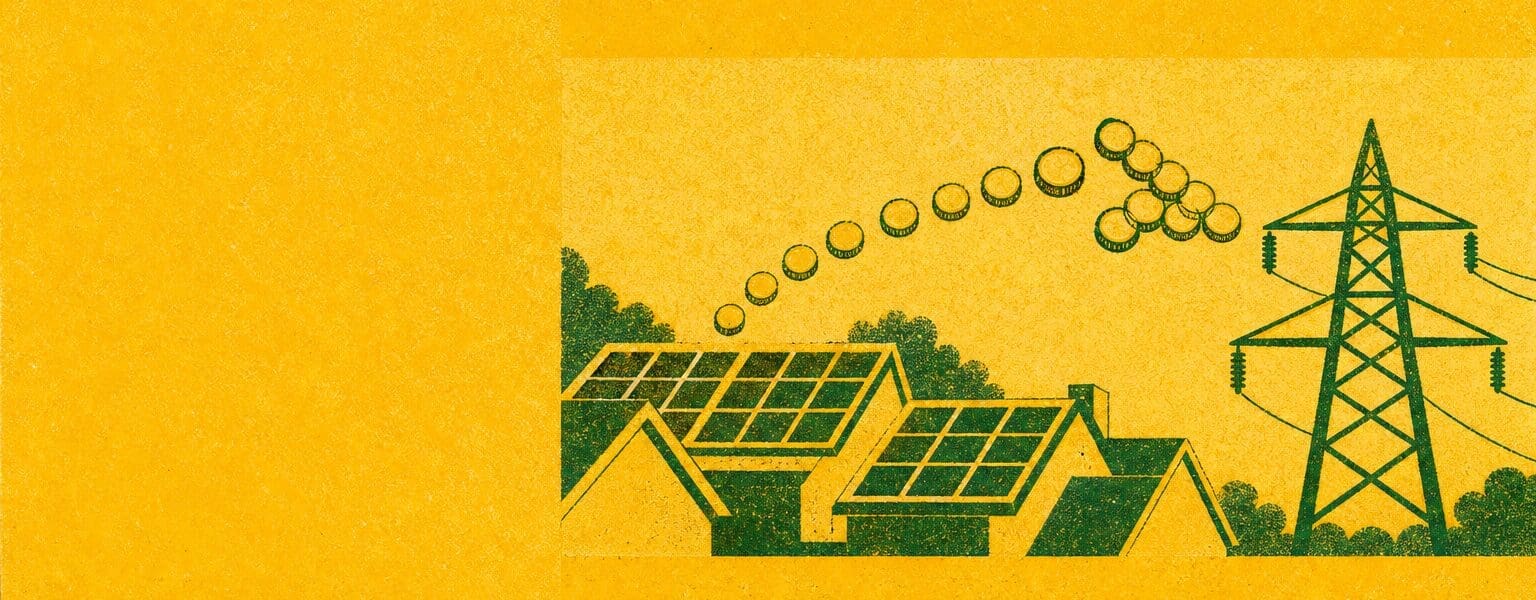

Your solar panels might be giving electricity away for pennies
If you’ve got solar panels, every unit you don’t use yourself gets exported to the grid, and someone pays you for it. The trouble is, plenty of households are still sitting on whatever SEG rate their installer signed them up to years ago, without ever checking if it’s still competitive.
SEG rates are the forgotten cousin of the energy switching conversation. Everyone talks about import prices. Almost nobody checks what they’re being paid to export. Roo would call this the easiest switch nobody bothers to make.
What is the Smart Export Guarantee?
The Smart Export Guarantee, or SEG, launched on 1 January 2020 as the replacement for the old Feed in Tariff, which had closed to new applicants the year before. Larger suppliers, those with 150,000 or more domestic customers, must offer at least one SEG tariff, and Ofgem requires that SEG tariff rates are “always above zero”. Beyond that floor, suppliers set their own rates, and the gap between the best and worst is enormous.
Nobody polices what a “good” SEG rate looks like. It’s entirely down to you to compare, which is exactly the kind of quiet inertia that costs solar households real money every quarter.
Why do SEG rates vary so much?
The spread is far wider than most people expect. Comparison research in September 2026 put advertised SEG rates from as low as 1.05p per kWh at the bottom end up to 25p at the very top, a difference of more than twentyfold for the same exported unit of electricity.
The catch is that the headline rates come loaded with conditions. The 25p tariff requires buying a solar and battery system through that supplier or its named installer, taking your import electricity from them too, and it drops to 12p after twelve months. Other high rates in the high teens work the same way: they’re tied to being an import customer, using a specific installer, or both. The best rate available without switching your import supplier at all was around 13p, which is a more realistic benchmark for most households than the top of the table.
These rates move often and aren’t set by a regulator, so treat any specific number as a snapshot rather than a promise. What’s true in September might have shifted by December.
Key takeaways
- Larger suppliers must offer an SEG rate above zero, but anything above that floor is entirely their own choice.
- Advertised SEG rates ran from about 1.05p up to 25p per kWh in September 2026, a more than twentyfold spread.
- The very highest rates are conditional, often on buying your system through the supplier and taking your import electricity from them, and some drop sharply after the first year.
- You don’t have to buy your import electricity and your export tariff from the same supplier.
- SEG rates change often, so a rate that was competitive last year may not be now.
Do you have to switch supplier to get a better SEG rate?
No, and this is the part most people miss. Your SEG export tariff and your import tariff don’t have to come from the same company. You can stay with your current supplier for the electricity you buy and switch only your export tariff to whichever provider pays the most for what you send back.
In practice, plenty of households never separate the two, mostly because nobody at the point of installation ever mentioned it was an option. It’s worth checking both independently rather than assuming your current supplier’s SEG offer is the only one available to you.
A home battery changes the maths too. Some of the strongest SEG rates on the market are only available if you’re storing power to export at the most valuable times, rather than sending it out the moment your panels generate it. That’s a bigger decision than switching a tariff, but it’s worth knowing the two are connected.
Three checks before you accept your current SEG rate
- Find out what you’re actually being paid. Check a recent bill or your online account for your current export rate in pence per kWh.
- Compare it against current offers. Rates change regularly, so a comparison done when your panels were installed may be years out of date.
- Check any conditions attached. The highest advertised rates usually require a specific installer, a compatible battery, taking your import electricity from the same supplier, or all three, and some step down after the first year.
None of this requires new panels or new kit. It’s a paperwork switch, and for a household exporting a meaningful chunk of what their panels generate, it’s one of the easiest reviews to do this autumn before the shorter days cut export volumes anyway. Against a typical household bill that’s already risen this year, a few extra pence per exported unit adds up to a genuine offset rather than loose change.
Frequently asked questions about SEG rates
- Do I need a smart meter to get paid for exported energy?
- Generally yes. SEG payments are based on metered export data, so you’ll usually need a smart meter or export meter capable of recording it, though some suppliers offer deemed export rates for older installations.
- Can I switch my SEG tariff without switching my whole energy supply?
- Yes. Your SEG export tariff is separate from your import contract, so you can shop around for the best export rate while keeping your existing supplier for the electricity you buy. Bear in mind the very top rates usually require you to move your import supply too.
- Is a higher advertised SEG rate always better?
- Not necessarily. The highest rates come with conditions, and at least one headline tariff drops to less than half its advertised rate after twelve months. Check the small print and the term, not just the number.
- What happened to the old Feed in Tariff?
- The Feed in Tariff closed to new applicants in 2019 and the Smart Export Guarantee launched on 1 January 2020. Households still on a legacy Feed in Tariff contract generally keep their existing terms rather than moving to SEG.
- Will my SEG rate change automatically over time?
- It depends on your contract. Some SEG tariffs are fixed for a set period, others can be varied by the supplier, so it’s worth checking your terms rather than assuming the rate you signed up to is still what you’re being paid.
Solar panels already do the hard part for free. Making sure you’re paid properly for what you don’t use is the bit that’s easy to leave on autopilot, and the bit worth five minutes of checking.
An SEG rate you never check is a bit like a savings account nobody’s looked at in years. Probably fine, possibly terrible, and only one quick look away from knowing which.
Sources
Rates checked September 2026. SEG tariffs change frequently and are not regulated beyond the above zero floor, so always check the current rate and its conditions directly with the supplier.


