

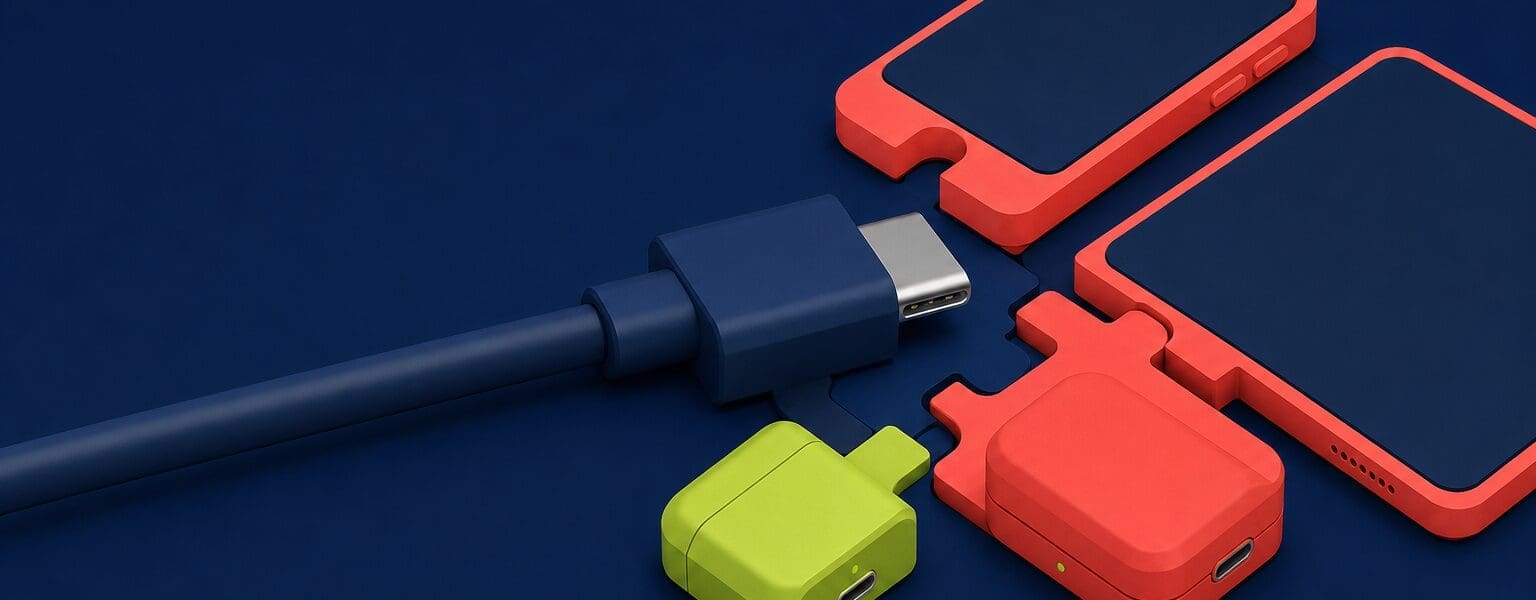

Your iPhone switched to USB C. UK law had nothing to do with it
Every new iPhone since the 15 has shipped with USB C instead of Lightning, and most people assume that’s because of a new UK law forcing it. It isn’t. The USB C charger rule is an EU regulation, and the UK government has explicitly said it isn’t adopting it.
What actually happened is simpler and slightly stranger: Apple builds one phone for a global market, the EU is a market it can’t ignore, and it was cheaper to switch everywhere than to make a separate UK version with the old port.
What does the USB C charger rule actually say?
The EU’s common charger rule requires phones, tablets, cameras and several other small electronics sold in the EU to use USB C for wired charging. It took effect on 28 December 2024, and was extended to laptops on 28 April 2026.
The goal is less ewaste from a drawer full of incompatible cables, and a single charger that works across brands. It’s a tidy idea. It’s also, legally, nothing to do with Great Britain.
So why does my UK phone have USB C too?
Because Northern Ireland, under the post Brexit arrangements, stays inside the EU’s single market for goods, meaning the USB C charger rule does technically apply there. Rather than build a Northern Ireland only version of the iPhone, and a separate one for the rest of the UK, manufacturers simply build one version for the whole UK market that already satisfies the EU rule.
The UK government confirmed after a call for evidence that it isn’t currently planning to copy the EU rule into UK law. Great Britain gets the same phones as everyone else anyway, just without the legislation to thank for it.
Key takeaways
- The USB C charger rule is EU law, not UK law. The UK government has said it isn’t adopting it.
- Northern Ireland is legally covered by the rule under the post Brexit goods arrangements.
- UK phones have USB C anyway because manufacturers build one version for the whole market rather than two.
- The rule took effect for phones on 28 December 2024 and was extended to laptops on 28 April 2026.
Which gadgets are actually covered?
The EU rule covers mobile phones, tablets, digital cameras, headphones, headsets, videogame consoles, portable speakers, ereaders, keyboards, mice, portable navigation systems and earbuds. Laptops were deliberately left out of the first wave and joined in April 2026, which is why laptop charging bricks stayed a messier, more proprietary mix for longer than phone chargers did.
Some accessories sit in a slightly greyer area depending on exactly how they charge and how much power they draw, so don’t assume every gadget in a drawer is automatically covered just because your phone is.
Does this mean my old charger is now junk?
Not necessarily. Older Lightning based iPhones and accessories will carry on working exactly as before. Nothing forces you to bin a working charger just because new devices ship with a different port. The rule affects what manufacturers sell going forward, not what’s already in your drawer.
Where it gets genuinely useful is buying new. A single USB C cable now charges most modern phones, tablets, headphones and a growing pile of other gadgets, which means fewer chargers cluttering a bag and less guessing about which cable fits which device. Roo’s already down to one cable for everything he owns, which is about as close to smug as he gets.
What changed when laptops joined the rule
Since 28 April 2026, the same EU requirement has covered laptops sold in the bloc, pushing manufacturers further towards USB C charging across the board rather than proprietary laptop bricks. As with phones, UK buyers are seeing the benefit without the UK ever passing an equivalent law, simply because most manufacturers won’t bother building a UK only exception.
It’s a rare case where doing nothing, as a UK consumer, actually works out fine. The market sorts it out even where the law doesn’t. If you’re weighing up an upgrade once your current phone insurance or contract ends, that’s one less thing to factor in.
Frequently asked questions about the USB C charger rule
- Is USB C now a legal requirement in the UK?
- No. It’s an EU requirement that applies directly in Northern Ireland. Great Britain has no equivalent law, though most new devices use USB C regardless.
- Will my old Lightning charger stop working?
- No. Existing chargers and devices continue to work as normal. The rule only affects what’s built and sold from certain dates onward, not equipment you already own.
- Does the USB C charger rule cover wireless charging?
- No, it specifically covers wired charging ports. Wireless charging standards sit outside this particular rule.
- Does the rule cover laptops?
- Yes, since 28 April 2026. Laptops were excluded from the original December 2024 start date and were brought in under the same rule sixteen months later.
- Will the UK ever introduce its own version of this rule?
- The UK government has said it isn’t currently planning to, following a call for evidence, though that position could change if the market situation shifts.
- Do own brand or budget phone chargers still work with USB C devices?
- Generally yes, provided the cable and adapter meet USB C’s physical and power standards, though very cheap third party chargers can vary in charging speed and safety, so it’s worth buying from a reputable brand.
None of this changes which phone is actually worth buying, only which cable ends up in the box. If you’re due an upgrade anyway, whether that’s a folding phone or something more ordinary, it’s still worth comparing what different networks and retailers are charging for the same handset.
The USB C charger rule is a good example of how a law made somewhere else can still tidy up your drawer at home. No UK legislation required. Just a manufacturer deciding two versions of a phone weren’t worth the hassle.
Sources
Checked September 2026.


